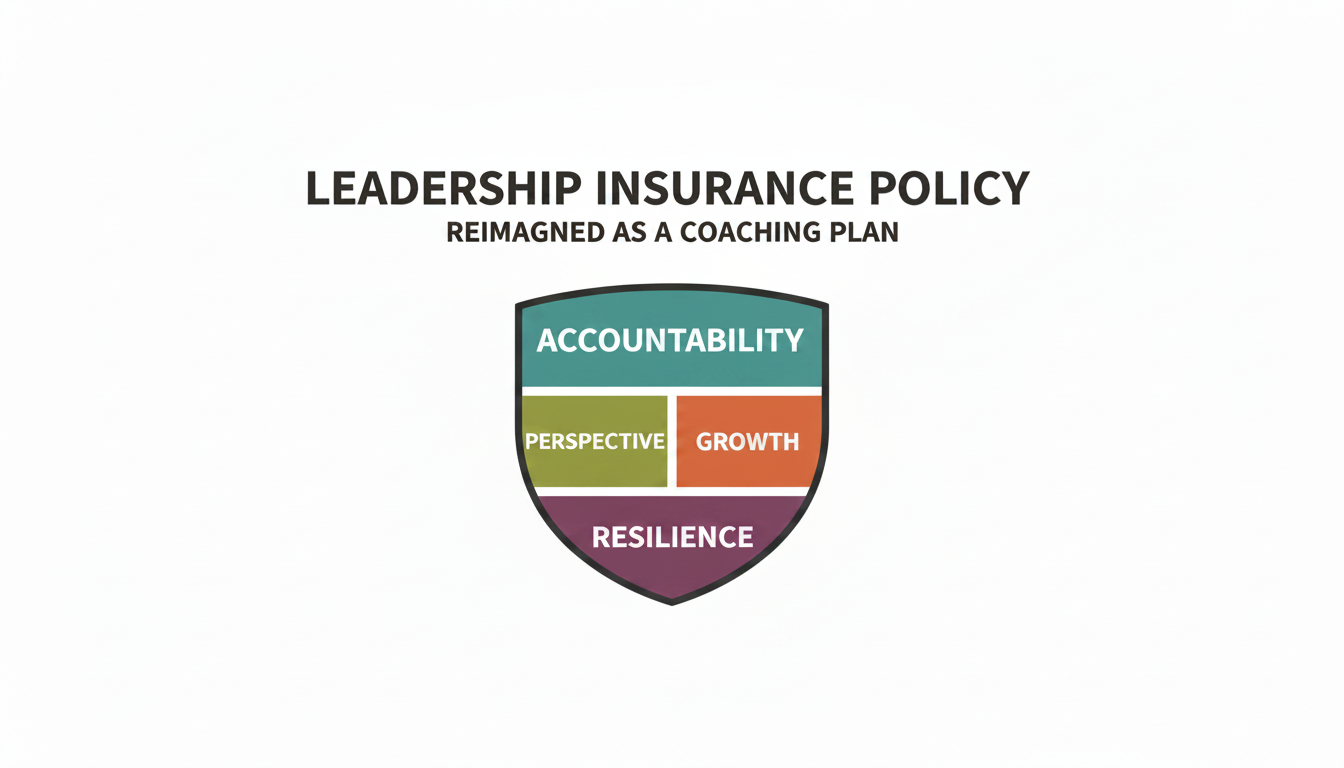
Also, the point of coaching is not motivation, it is protection when the stakes and pace are high. When decisions affect budgets, people, and timelines, a coach acts like a simple coverage plan: someone who helps you notice risk early and follow through when pressure rises.
Accountability is the coverage most leaders think they already have, until a busy week hits. A coach asks the hard questions, tracks the commitments you made in the last session, and checks what changed between high-stakes moments like board updates, reorg decisions, or a key hire.
If you do one thing, make accountability measurable:
Set 1 to 3 promises for the next 7 to 14 days
Decide what “done” looks like in plain terms (sent, scheduled, delegated, drafted)
Pick one proof point to bring back (a calendar invite, a draft doc, a screenshot, a debrief note)
Next, perspective and blind spots protect you from over-trusting your own story. When you are close to the work, it is easy to treat assumptions as facts, like “they are not ready” or “this will blow up if I push.” A coach provides an external lens to test those assumptions early, before they turn into expensive problems.
A common mistake is asking for advice too late, after the narrative has hardened. The fix is to bring the decision while it is still flexible, then pressure-test it with questions like:
What would I do if I had to decide in 48 hours
What am I avoiding because it feels uncomfortable
What data would change my mind this week
But protection is not only for the current fire, it is also for the version of you that has to lead next quarter. Growth and resilience coverage prevents stagnation and shortens recovery time after setbacks, like a missed target, a rough performance cycle, or a product launch that slips.
Here’s the catch: this works best when you are willing to name one real constraint. If you’re short on time, skip big goal setting and do a 15-minute reset after hard weeks: